Ever felt like you really know that podcast host, YouTuber, or TV character? You binge their content, laugh at their jokes, and maybe even feel a pang of concern when they share a personal struggle. You're not alone. This powerful, often unspoken connection is at the heart of Understanding Parasocial Interactions – a phenomenon shaping how we relate to the media world, and even to ourselves.
It's a strange blend of intimacy and distance, a feeling of friendship with someone who has no idea you exist. Yet, for our brains, these connections can be incredibly real, influencing our emotions and perceptions in profound ways. Let's pull back the curtain on this fascinating aspect of modern life.
At a Glance: What You'll Discover About Parasocial Interactions
- It's a one-sided connection: You feel like you know a media personality, but they don't know you.
- Your brain treats it like a real friendship: Despite knowing it's not "real," your mind processes these interactions similarly to face-to-face communication.
- Media is designed for it: Creators actively foster an illusion of intimacy to draw you in.
- They can be healthy or unhealthy: From a comforting presence to obsessive attachment, the spectrum is wide.
- The digital age amplifies them: Social media makes it easier than ever to feel "close" to celebrities and influencers.
- They impact everyone: Children, adults, and even entire communities can experience their effects.
The Invisible Handshake: Defining Parasocial Interactions
Imagine you're watching your favorite streamer play a game, and they look directly into the camera, asking, "What do you think of this move, chat?" You might type your answer, or even respond out loud to your screen. Or perhaps you've followed a celebrity's life through social media updates, feeling a rush of happiness at their successes and sadness at their setbacks. That's a parasocial interaction (PSI) in action.
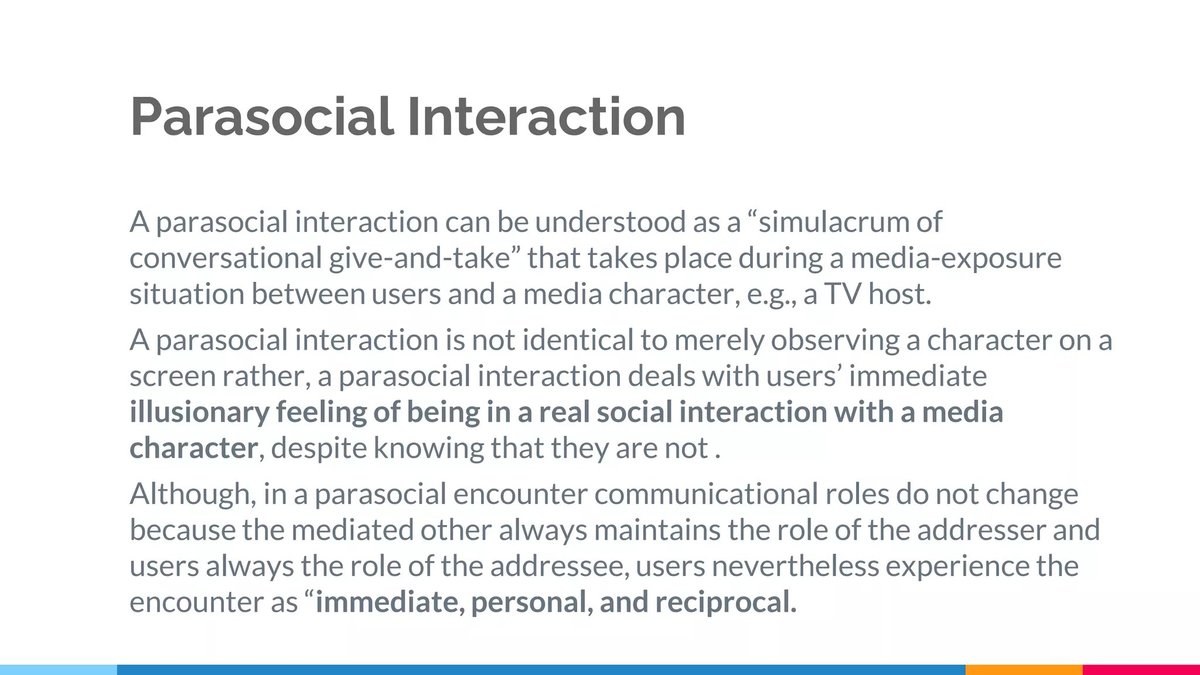
At its core, a PSI is a semblance of interpersonal exchange where members of an audience come to feel that they personally know a performer they have encountered in mass media. It's an illusion of intimacy, a one-sided sense of connection with someone who remains fundamentally unaware of your individual existence. Researchers like Donald Horton and R. Richard Wohl, who coined the term in the 1950s, observed that people would act as if media personalities were part of their social circle.
Over time, frequent PSIs can blossom into a parasocial relationship (PSR) – a more sustained, one-sided sense of connection built on comfort, satisfaction, and even commitment. You're not just interacting in the moment; you've developed an ongoing bond.
Why Our Brains Fall For It: The Psychology Behind the Connection
"Wait," you might think, "I know they don't know me. Why would my brain treat it like a real interaction?" This is where it gets fascinating. Human brains appear to process PSIs in much the same way as real-life interpersonal interactions. The novelty of technologically mediated encounters means that while we intellectually recognize the artificiality of the media apparatus, our perception of PSIs causes a very real psychological reaction.
It's a testament to our social wiring. As inherently social creatures, we're hardwired to seek connection and respond to human cues. When a media personality looks into the camera, shares personal stories, or adopts an informal, conversational tone, our ancient social sensors light up. Our brains interpret these signals as genuine human interaction, even if a part of us knows better. This isn't a sign of weakness; it's a fundamental aspect of human cognition responding to novel stimuli.
The Art of Intimacy: How Media Cultivates PSIs
Media creators are masters at forging this illusion. They understand that strong PSIs lead to engaged audiences and loyal fan bases. Here's how they do it:
Direct Address and Conversational Tones
Many talk show hosts, podcasters, and YouTube creators directly address the camera or microphone, speaking as if in conversation with each viewer or listener. Podcasts, especially those centered around one or more hosts, often adopt an informal, chatty tone, resembling a gathering of friends. This creates a powerful sense of personal connection, making you feel like a privileged participant in their world.
Manufactured Familial Settings
Situation comedies and reality shows often create "familial" settings that viewers become deeply accustomed to. We watch characters grow, face challenges, and celebrate triumphs, feeling like we're part of their extended family or close friend group. This consistent exposure fosters comfort and a sense of belonging.
Behind-the-Scenes Glimpses and Personal Sharing
Social media has revolutionized this. Influencers and celebrities regularly share snippets of their daily lives, personal thoughts, and vulnerabilities. This curated authenticity makes their lives feel more accessible and relatable, deepening the one-sided bond. You get to see the "real" them, or at least the version they want you to see, which further blurs the line between public persona and private individual.
The Spectrum of Connection: From Casual Interest to "Parasocial Breakup"
Not all PSIs are created equal. You might have a mild, fleeting interest in a news anchor, or a deep, committed connection to a long-running fictional character. The key factor is investment.
As PSIs become increasingly frequent and personal, many audience members enter into a parasocial relationship built on comfort, satisfaction, and commitment. This commitment isn't just about time spent; it's an emotional investment. Conversely, Horton and Wohl posited, people whose encounters with mass media figures are infrequent may feel detached.
Researchers have even found that commitment levels (measured on scales used for interpersonal relationships) for viewers of both fictional and nonfictional television programs were predicted by how invested the viewers were. Consequently, when a program went off the air, committed viewers experienced higher levels of distress, dubbed a “parasocial breakup,” than uncommitted viewers. Think of the collective mourning when a beloved TV series ends or a favorite band breaks up; that's a parasocial breakup on a grand scale. The grief is real because the connection, though one-sided, was emotionally impactful.
Young Minds and Media: PSIs in Children and Adolescents
PSIs are especially common among children and adolescents, and for good reason. Young people’s ability to distinguish between the real and the artificial is less developed than that of adults, allowing parasocial relationships to form without adult levels of self-consciousness. Children often engage in imaginative play where they attribute sentience to inanimate objects or fictional characters; PSIs extend this natural tendency.
Some children’s television programs skillfully use this parasocial space for education. On-screen characters might pause to invite viewers’ “participation,” asking questions or encouraging actions. This isn't just entertaining; PSIs help develop children’s ability to personify, thus opening the door for them to feel identification and empathy, crucial skills for social development. It’s a powerful tool when used responsibly.
The Digital Echo Chamber: PSIs in the Age of Algorithms
The digital age has supercharged parasocial interactions. Social media platforms like Instagram, YouTube, and TikTok can effectively “read” a user’s interests and suggest related content. This creates a personalized media stream, often leading to the formation of increasingly deep and closely held PSIs. Think about how algorithms connect you with creators you might "resonate" with, or how watching a live stream feels like you're in the room with your favorite personality.
The constant availability of these parasocial spaces, heightened by advancements in smartphone technology and smartphones’ increasing presence in our daily lives, can blur the line between interpersonal and parasocial interaction. The immediacy of direct messages (even if often unread), comments, and virtual fan interactions creates an unprecedented sense of closeness.
Digital PSIs have also fostered new phenomena. During the COVID-19 pandemic, the quarantined world saw a significant uptick in parasocial relationships as people sought to cope with isolation, the effects of which continue to be investigated. When real-world connections were limited, many turned to media personalities for comfort, companionship, and a sense of shared experience.
Navigating the Digital Landscape
This digital intensification means it's more crucial than ever to be aware of your own parasocial tendencies. The ease with which we can consume endless content and feel "part" of a creator's life means the line between healthy admiration and unhealthy obsession can become incredibly thin. It's worth considering how platforms are designed to make you feel closer, sometimes to the point of potentially unhealthy attachment. If you're looking for Your ultimate guide to Simp City or want to understand the dynamics of intense, often unrequited digital admiration, recognizing the role of digital PSIs is a crucial first step.
Healthy Admiration vs. Unhealthy Obsession: A Critical Balance
While parasocial interactions are a natural part of media consumption, they exist on a spectrum. For many, they provide companionship, entertainment, inspiration, and even a sense of belonging. They can expose us to new ideas, cultures, and perspectives through the lens of a trusted personality.
However, PSIs can tip into unhealthy territory. This often happens when:
- They replace real-world relationships: If your media connections become your primary source of social interaction, it might be time to reassess.
- Unrealistic expectations develop: Believing you have a genuine friendship or expecting the celebrity to acknowledge your existence can lead to disappointment and distress.
- Emotional manipulation occurs: Some creators, intentionally or unintentionally, leverage PSIs for their own gain, whether financial or attention-based.
- Obsession takes hold: Excessive time spent, inability to differentiate fantasy from reality, or feeling extreme distress over their personal lives are red flags.
- Identity becomes entangled: Basing your self-worth or life decisions heavily on the perceived approval or lifestyle of a media personality can be detrimental.
It's about maintaining perspective. You can admire, enjoy, and even feel inspired by a media figure without losing touch with your own reality or neglecting your actual relationships.
Your Inner Journalist: Critically Engaging with Media Personalities
So, how do you enjoy the benefits of PSIs without falling into the pitfalls? It largely comes down to critical engagement and self-awareness.
Acknowledge the Illusion:
Always remind yourself that while your feelings are real, the relationship itself is not reciprocal. The person you see on screen or hear on a podcast is a carefully constructed persona, not their full, unedited self.
2. ### Diversify Your Media Diet:
Don't put all your emotional eggs in one basket. Engage with a variety of creators and content types. This broadens your perspective and prevents over-reliance on a single source of parasocial connection.
3. ### Check Your Emotional Response:
Pay attention to how you feel after consuming content. Are you inspired, entertained, or informed? Or do you feel anxious, envious, or compelled to spend more? Your emotions are valuable indicators.
4. ### Prioritize Real Connections:
Actively nurture your in-person and two-sided digital relationships. These are the connections that provide true support, mutual understanding, and shared growth.
5. ### Understand the Business Model:
Remember that for most media personalities, creating content is their job. They are often selling a product, a lifestyle, or an idea. Understanding the commercial aspect can help you maintain a healthy distance.
Beyond the Screen: Harnessing the Power of Connection
Understanding parasocial interactions isn't about shunning all media connections. It's about empowering yourself to navigate the modern media landscape with awareness and intentionality. These relationships, when managed mindfully, can indeed enrich our lives, offering comfort, entertainment, and even valuable learning experiences.
The next time you find yourself feeling deeply connected to a celebrity, influencer, or character, take a moment. Acknowledge the feeling. Recognize the clever mechanisms at play. And then, consciously decide how you want that interaction to shape your real life. The power, ultimately, is yours.